ALMS Keeps It Simple For Youth Employability Service: Job Training Programs for Youth
All Leaders Must Serve (ALMS) is a nonprofit California mentoring organization with a unique approach that sets us apart. We empower young adults ages 15-25 to become job-ready, not just through traditional job readiness training, but also through our transformative training in soft skills, which includes work ethic, character development, and communication.
As an adult mentor organization that empowers through job readiness, we've learned to keep the message short, encouraging, and simple. In ALMS, we've learned to facilitate job training for youth in small increments that will keep young people engaged and interested. The lesson must come from the student's point of view, presenting information they may not have heard before, while also conveying the knowledge that employers are looking for this behavior, mindset, and action. The first 45 minutes we facilitate a lesson, which is the first and one of the most powerful things we can offer our youth – the lesson.
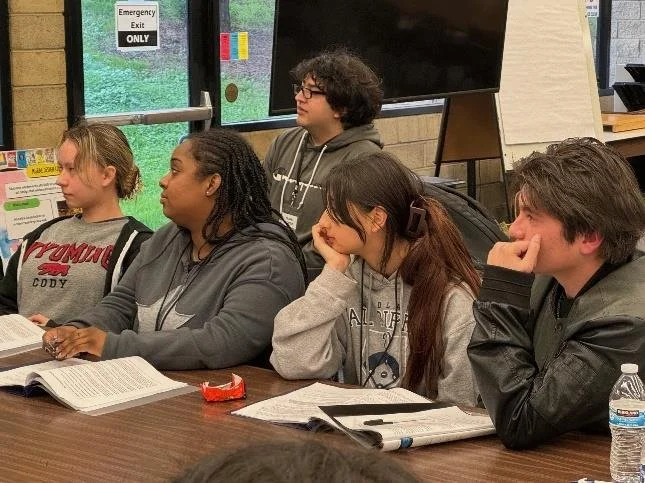
The best approach for a youth mentor program is to offer numerous opportunities for conversation during lessons. Most young people encounter training that only allows them to listen, but not to give feedback. It's a big mistake among training centers, education establishments, parents, and adult mentors. The fastest way to shut down the mind of a young person is to lecture them. Adults are so focused on imparting information to young people that they often talk without seeking feedback. It's one thing to teach this way to children, but we would get far more learning done if we also engaged them. But in the adolescent years and beyond, we should be asking what they are hearing!
Feedback is a cornerstone of our mentorship process at ALMS. We rely on it because we want to know if young people are genuinely listening and applying what we share with them. If we are only talking to hear ourselves speak or just to be seen, we are missing the great opportunity of preparing our youth to learn what we're talking about and to also think about what that means to them. We will never understand what they are hearing unless we ask them about it. Too often, educators and adults are afraid to learn that no one is paying attention, that the young adults disagree with our ideas, or that what we are saying seems irrelevant to the listener.
It is essential to ask our youth and find out what is going on. ALMS embeds questions during the lesson, specifically to find out where the student's understanding level is, as well as their interest. When mentoring at-risk youth, you cannot assume that they understand everything that is being said. The student may be struggling due to a lack of sleep. Lack of sleep may occur because there is trauma going on in the home. Trauma may be happening in the house due to insufficient income to cover bills and feed the family. And so it goes. We may never understand the underlining reasons, but we will know that the student is not engaged in understanding what goes on a resume or how to greet someone properly at a job interview.
Alternatively, the same student may struggle with vocabulary, which presents an opportunity to expand their vocabulary and thought. I recall when a student did not know the definition of an acronym. The adult mentors had a chance to stop and explain something so simple. Acronyms are prevalent in daily life; it could hinder that young person’s ability to navigate obtaining services or searching for employment.

ALMS keeps it simple by having everyone sit in a business setting and take turns reading a paragraph from that day’s lesson. By sitting in this way, we can start at one end of the room and ask everyone to read. Eventually, if someone struggles with reading, we are there to help them without shame or judgment.
Once, we had a young lady whose friends were so protective of her that she never had to read at her continuation school.
Facilitator: "Maria, would you read the next paragraph?"
Student's Friends: "No, she can't read. You shouldn't ask her!"
Facilitator: "Maria, I struggled with reading after graduation. I want you to try your best. We will help you."
It turns out that Maria had been in the country for two years. I called her phone and got her grandfather. We spoke for a while, and I invited him to bring Maria to the library, and I would help her read. He was thrilled and took her to the library the next day. Once I asked her to read for me, with none of her friends present, Maria began to read – almost perfectly! She was also surprised. She had been sitting in school, watching other people read, and as she followed along, she started getting the words without realizing it. Maria graduated from high school that year, receiving eighty percent of the scholarships. She went on to the Community College the following year.
At ALMS, we believe in the power of the mentor to create a safe and supportive learning environment. We often underestimate our youth by not challenging them to step out of their comfort zone and speak up, read, or provide feedback. It's not unusual for me to walk up to a student in the meeting and ask a direct question. I will have asked everyone the same question. But if an answer intrigues me and I want to learn more, I will move closer to them and ask them to tell me more. I will also let them know that I am not trying to embarrass them – "I want to understand!" Once they are convinced that I am authentic and genuinely interested in their thoughts, they have always opened up and shared.
Most students would appreciate being seen by an adult who values their feedback. That's what ALMS does. We must keep it simple by asking – "I want to know you, tell me more," young people will respond.

Many students do not share their thoughts. They may be brilliant visionaries and creative craftsmen; they may be with writers, poets, painters, and chefs. They may be great project managers, or healers, caretakers, or teaching. But whatever they are, whoever they are, they are waiting for someone to tell them that they can do it. We need to understand them their full person and potential and what they want to do with it. It's our responsibility to provide them with the information they need to 'become' and not neglect to ask them questions. The questions we ask are a simple way to peel the onion back to help them find the core of who they are supposed to be. Help ALMS continue to challenge our youth to become critical thinkers and servant leaders who give back to their community.
Monthly givers make it possible for ALMS to keep it simple - focusing on our youth instead of organizing large fundraising events or pursuing government grants.
Become a monthly giver.
For more information contact Jayne Williams, Executive Director at jayne@almsinyolo.org or go to our website at www.AllLeadersMustServe.org.
If you would like to donate to youth mentorship programs, visit ALMS at www.AllLeadersMustServe.org/donate.
